Business Name: BeeHive Assisted Living Homes of Rio Rancho NM #1 - Dementia Care & Memory Care
Address: 204 Silent Spring Rd NE, Rio Rancho, NM 87124
Phone: (505) 221-6400
BeeHive Assisted Living Homes of Rio Rancho NM #1 - Dementia Care & Memory Care
BeeHive Assisted Living Homes of Rio Rancho NM #1 - Dementia Care & Memory Care is a premier Rio Rancho Assisted Living facilities and the perfect transition from an independent living facility or environment. Our Alzheimer care in Rio Rancho, NM is designed to be smaller to create a more intimate atmosphere and to provide a family feel while our residents experience exceptional quality care. We promote memory care assisted living with caregivers who are here to help. Memory care assisted living is one of the most specialized types of senior living facilities you'll find. Dementia care assisted living in Rio Rancho NM offers catered memory care services, attention and medication management, often in a secure dementia assisted living in Rio Rancho or nursing home setting.
204 Silent Spring Rd NE, Rio Rancho, NM 87124
Business Hours
Monday thru Friday: 9:00am to 5:00pm
Facebook: https://www.facebook.com/BeeHiveHomesRioRancho
YouTube: https://www.youtube.com/@WelcomeHomeBeeHiveHomes
Families hardly ever start by asking, "How huge is the building?" when they start trying to find assisted living or senior care. They inquire about safety, generosity, activities, costs, maybe memory care. Yet, after years of strolling households through decisions and working inside both large senior neighborhoods and small residential homes, I have seen one element predict quality more dependably than nearly anything else: size.
The number of locals in a home shapes almost every part of elderly care. It impacts how well staff understand everyone, how quickly subtle health modifications are discovered, how flexible regimens can be, and whether respite care feels like authentic relief or a difficult interruption.
Large facilities can look remarkable, with chandeliers, restaurants, and hectic calendars. Smaller assisted living homes frequently sit quietly in residential neighborhoods, in some cases converted from single household homes, with six to 10 citizens and a tiny parking lot. From the street, they can seem typical. Inside, the distinction in lived experience is frequently dramatic.

This short article concentrates on that distinction, and on when a smaller setting may provide better look after an older grownup you love.
What "small" in fact suggests in assisted living
In practice, "small" generally describes assisted living homes with somewhere between 4 and 16 residents. Licensing classifications vary by state, but you might see terms like:
Residential care home.
Adult household home. Board and care home. Group home. Care home or micro community.These are not marketing labels even regulative ones, but the pattern is comparable. Small homes generally:
Operate in a home or a small, home like building.
Have just one or more typical areas. Utilize a simple, shared kitchen and dining space. Keep staffing tight, frequently with one or two caregivers present at a time, plus on call support.Larger assisted living neighborhoods might have 50, 100, even 200 locals across multiple wings and floors. They typically include separate dining rooms, specialized memory care systems, physical treatment fitness centers, hairdresser, and a more formalized administrative structure.
Both models can be licensed as assisted living and can lawfully offer similar levels of support with activities of daily living: bathing, dressing, medication tips, mobility help, toileting, and standard health monitoring. The guidelines do not completely catch how different the daily experience feels in a house with 8 homeowners versus a school with 120.
Why size matters more than a lot of households realize
The most truthful way to describe it is this: smaller homes make it harder to conceal. That operates in favor of the resident.
In a community with 80 locals, a team member might do their finest, however they are managing more faces, more homes, more calls. When staffing is tight, residents who are peaceful, shy, or cognitively impaired are at greater risk of flying under the radar. A minor shift in state of mind, a slower gait, a small decline in hunger can be easy to miss when a caretaker's job list is large.
In a small assisted living home, there are fewer locations to vanish to. Meals take place at one table or in one room. Personnel and locals see each other repeatedly throughout the day, not simply at scheduled care times. When routines are that intimate, changes stand out.
This has useful effects:
An early urinary system infection is caught because somebody notifications that Mrs. Lopez is requesting for the restroom regularly and appears "foggy" compared to yesterday.
A subtle medication negative effects is flagged since Mr. Kumar, who typically ends up breakfast, has left half his plate untouched three days in a row. A quiet resident who rarely complains is seen recoiling when transferring out of a chair, and the staff member has adequate time and connection to ask follow up questions.Health care professionals call this continuity and familiarity. Families typically describe it more simply: "They actually know Mom here."
How smaller homes change personnel relationships
Caregiver ratios are necessary, however they do not tell the complete story. A big assisted living facility might promote 1 staff member for each 10 homeowners. A small home might state 1 to 5 or 1 to 8. On paper, these look comparable as soon as you consider day versus night, peak versus low activity times.
The difference lies less in the numbers and more in the pattern of contact.
In a large structure, personnel tasks change routinely. One week, a resident might have a particular assistant aiding with bath and dressing. The next week, another person covers that hallway due to staffing changes. Supervisors do their finest to keep continuity, however with dozens of staff members and several shifts, variation is inevitable.
In a small assisted living home, there are just less individuals on the schedule. The same caretaker may aid with breakfast, medication pointers, showers, and night routines for the exact same handful of residents, day after day. Gradually, this consistency allows staff to:
Learn everyone's baseline practices and quirks.
Pick up on minor deviations that might signal trouble. Build enough trust that homeowners share issues more freely. Notification relational issues, such as 2 citizens who argue repeatedly or a new resident who feels left out.One caregiver once informed me, about a six resident home where she worked, "There is no faking it here. If you remain in a tiff, they all feel it. And if one of them is off, we feel that too." That mutual exposure can be emotionally demanding, however it keeps the caregiving relationship authentic.
Daily life: regular, versatility, and control
Many families picture assisted living as a place with packed activities calendars and social choices at every hour. Large neighborhoods strive to provide that: motion picture nights, bingo, lectures, exercise classes, outings, religious services, live music. For some elders, specifically those who are outgoing and mobile, this range is energizing.
Small homes rarely have that scale of programs. Instead, they offer a quieter rhythm. The living-room might host an easy workout session with light weights. A volunteer comes over to play guitar on Thursdays. A team member establishes a puzzle at the table. A getaway might be a trip in a van to the park, not a huge organized excursion.
What small homes can frequently provide, however, is greater flexibility and individual control for locals who do not fit into a stringent group schedule.
If a resident is used to waking at 9:30 and prefers coffee before conversation, a caregiver in a small home is most likely to accommodate that choice. They are not hurrying to get 25 people dressed and into the dining room before a repaired breakfast window closes. If somebody is having a difficult morning with arthritis discomfort, there is more room to change timing.
Meals are another example. In many big assisted living neighborhoods, menus are prepared weeks in advance. Locals select from several alternatives, which can be quite good, however the kitchen runs on a tight system: breakfast is served from 7:30 to 9:00, lunch from 11:30 to 1:30, and so on.
In a small home, the food often looks more like family design cooking. There might not be 5 entree choices, but the cook can respond on the fly. If 2 residents yearn for oatmeal instead of eggs, it is easier to state yes. If somebody has a favorite soup that reminds them of home, the personnel might have the ability to integrate it more easily into the rotation.
For senior citizens with cognitive decrease, consisting of early to mid phase dementia, this versatile, home like environment often feels less frustrating. There are fewer corridors, fewer spaces to confuse, fewer faces to track. The same sofa, the same pet oversleeping the corner, the same caregiver singing while she sets the table. Predictability can be exceptionally calming.
Respite care: when a short stay requires to feel like a safe harbor
Respite care, in plain language, is brief term assisted living or elderly care that offers family caregivers a break. It may be a week while a daughter takes a trip for work, a month while a spouse recuperates from surgery, or a couple of days to avoid burnout after a difficult season.
In big senior care communities, respite residents sometimes feel like guests in a hotel: confessed, oriented, then blended into an existing system. Personnel might be kind, however they are handling a capacity. It can take a while for a short-term resident's preferences and history to be known beyond the basics in the chart.
Smaller assisted living homes deal with respite care in a different way practically by design. When there are 8 citizens rather of eighty, a new arrival stands out. The staff will naturally invest more time in direct contact, assisting with unpacking, signing up with meals, and folding the individual into day-to-day regimens. Regular residents likewise observe and, in numerous homes, invite the new person with a kind of casual hospitality that is tough to script.
I have actually seen respite stays in small homes become turning points. One child utilized a two week respite for his mother in a 6 bed home while he looked after immediate company out of state. He returned anticipating regret and tears. Rather, his mother greeted him with, "You look exhausted. Did you eat?" and a list of brand-new friends she had actually made. She picked to relocate a number of months later on, not out of pressure, but due to the fact that the respite stay revealed her that assisted living could feel like extended family instead of institutionalization.
That said, respite care in small homes does have limitations. Capacity is tight, and a single respite bed can be hard to secure. Preparation ahead matters more, specifically around vacations and summer season when family caretakers are most likely to travel.
Key differences between small and big assisted living homes
The following contrast is simplified, however it catches patterns numerous households discover when they tour both options.
- Atmosphere: Big neighborhoods tend to feel like hotels or schools, with lobbies and multiple wings. Small homes feel closer to a shared family, in some cases quieter and less polished, but normally more familiar. Social life: Big settings can use more structured activities and a bigger swimming pool of prospective good friends. Small homes rely more on organic conversation, staff engagement, and small group interactions. Staff relationship: In large facilities, locals may interact with lots of staff members, which can be stimulating but likewise impersonal. In small homes, relationships are less and closer, with more continuity. Flexibility: Larger operations depend on schedules and systems to operate, which can restrict flexibility. Smaller homes frequently adapt more around specific regimens, though they may use fewer official choices overall.
Neither is universally "better," but for lots of senior citizens who are frail, shy, quickly overwhelmed, or having problem with memory, the trade offs typically favor the smaller environment.
Clinical outcomes: what we actually see over time
There is minimal large scale research that directly compares outcomes between small and large assisted living designs, partly since licensing classifications differ by state and data can be unpleasant. Still, patterns emerge in practice.
Families and healthcare providers typically report:
Slower practical decline in small homes, especially for citizens with moderate disability who get hands on cueing and support throughout the day rather than just at arranged times.
Fewer preventable hospitalizations due to dehydration, missed out on medications, or late acknowledgment of infections. These concerns are not distinct to big communities, however they are less likely to progress undetected in a smaller, more tightly observed setting. Much better behavioral stability for homeowners with dementia, likely connected to lower environmental stimulation, consistent staffing, and simpler routines.At the exact same time, larger senior care neighborhoods sometimes supply much better access to on site services such as going to doctors, lab draws, physical therapy, or specialized clinics. They may also have more robust emergency situation reaction systems, formal fall avoidance programs, and security infrastructure.
A frail older adult with numerous complex medical conditions might gain from a bigger setting if that setting is attached to a continuum of care: competent nursing, rehab, palliative care. A fairly steady elder who primarily requires aid with everyday tasks and companionship might thrive more in a small assisted living home where life feels less medicalized.
The trade offs: smaller is not constantly easier
It is tempting to romanticize small homes as generally warm and attentive. The reality is more nuanced.
Staff burnout can be a threat. With just a few caregivers, character conflicts or staff turnover struck harder. If a cherished caretaker leaves, all homeowners feel that loss. Management quality matters as much as size.
Regulation and oversight are also uneven. Some states carefully keep an eye on residential care homes with routine examinations and transparent reporting. Others are looser. A smaller home that is inadequately run can conceal major deficiencies behind a friendly facade.
Families ought to likewise recognize limitations of scope. Numerous small homes are not designed to manage:
Complex medical devices such as ventilators or extensive IV therapies.
Regular two individual transfers requiring heavy equipment. Extreme behavioral problems such as continuous hostility, roaming that persists despite interventions, or extreme exit seeking. 
The finest small assisted living homes are truthful about what they can and can not securely deal with. They partner with home health, hospice, or outside clinicians when needed, and they communicate early when a resident's needs might outgrow their model.
How to evaluate a small assisted living home
Touring a small home feels various from checking out a big facility. There is often no sales brochure rack, no marketing director, no grand lobby. Often a caregiver opens the door while stirring a pot on the stove. This informality can be rejuvenating, however it likewise means you should be more deliberate about what you observe and ask.
Here is a brief, practical checklist to bring with you:
- Ask about staffing: The number of caregivers are on duty throughout days, evenings, and nights? Who covers when someone calls in sick? Clarify medical assistance: Who handles medications, and how are they kept and tracked? Which checking out healthcare providers come regularly? Explore routines: How fixed are wake times, meals, and activities? How do they adapt to a resident who chooses a different rhythm? Discuss end of life: Can the home support residents through severe decrease with hospice involvement, or do they typically move individuals out? Request referrals: Can they link you with a couple of current or former relative happy to share their experience?
During the visit, trust your senses. Smell matters. Noise levels matter. Enjoy how personnel talk to locals when they think no one is really listening. Are they using labels or titles the resident clearly prefers? Do they crouch to eye level or talk from across the room? Tone and body movement typically speak more loudly than policies.
I likewise recommend arriving a couple of minutes early or remaining a few minutes past the official tour. That unscripted time reveals more of the genuine rhythm of the place.
Cost, transparency, and what you really get for your money
Families often assume that small assisted living homes are more affordable because they look easier, without grand architecture or large dining-room. That is not always the case.
Costs differ commonly by area, but numerous patterns tend to appear:
Base rates in small homes can be similar to, or a little lower than, mid range large neighborhoods in the very same area.
Care level fees are often more uncomplicated, often bundled as "all inclusive" in extremely small homes so that increases in assistance do not produce unlimited small surcharges. Extra services such as on website beauty parlor, transport to far-off consultations, or complex therapies might not be available, so families must budget individually if those are needed.The key is to ask comprehensive concerns about what is included. 2 homes charging the same monthly cost may deliver really different things. For instance, one might include incontinence supplies, medication management, and escort to meals. Another may charge extra for each of those pieces.
Transparent small homes are typically rather direct when you ask, "If my mother's requirements increase with time, what type of cost changes should we expect?" Beware unclear responses that lean too greatly on "We will deal with you" without clear parameters.
When a bigger assisted living neighborhood might be the better fit
Despite the lots of advantages of smaller homes, there are circumstances where a larger senior care neighborhood is more appropriate.
An elder who is highly social, enjoys events, and takes pleasure in variety may feel stifled in a really small environment. They may want a choice of three workout classes, a book club, a choir, and a woodworking group. A big community is better equipped to use that menu.
Some families also desire a continuum of care on one school: independent living, assisted living, memory care, nursing home. They value the ability to move a loved one between levels of care without changing familiar environments totally. Small homes normally can not offer that range.
Transportation can matter too. Larger neighborhoods often run scheduled shuttle bus to shopping centers, religious services, and cultural events. Small homes may provide standard transport to medical appointments, but very little beyond that.
Finally, if a person has very intricate medical requirements that stop short of needing a knowledgeable nursing center, a larger assisted living neighborhood with on website clinical support might be much safer. Examples include frequent need for on site laboratory monitoring, complex injury care, or tight coordination with numerous specialists.
The point is not to treat small as instantly remarkable, however to match the environment to the person.
Bringing it back to the individual
Assisted living, respite care, and long term elderly care decisions are never ever only about square footage or staffing grids. They are about a human life in a particular season, with a specific history, personality, and set of vulnerabilities.
When you stand at the crossroads between a big, refined senior care campus and a modest, eight bed home on a quiet street, attempt to imagine your loved one not just relocating, but living there on a regular Tuesday in February.
Where will they likely feel seen, not just served?
Where will small changes be noticed and acted on before they turn into crises? Where will their quirks be comprehended as part of who they are, not treated as issues to manage?For lots of older adults, particularly those who are physically fragile, easily overstimulated, or dealing with amnesia, the response is typically the smaller assisted living home, where scale works in favor of intimacy, and where daily life still feels like life, not a schedule.
That option will not fix every issue. Caregiving is effort, in any setting. However when size lines up with need, it becomes much more most likely that your loved one's last years will be shaped by familiarity, responsiveness, and genuine connection, rather than by the logistics of a large system senior care beehivehomes.com trying, sometimes unsuccessfully, to keep up.
BeeHive Assisted Living Homes of Rio Rancho NM #1 - Dementia Care & Memory Care provides assisted living care
BeeHive Assisted Living Homes of Rio Rancho NM #1 - Dementia Care & Memory Care provides memory care services
BeeHive Assisted Living Homes of Rio Rancho NM #1 - Dementia Care & Memory Care provides respite care services
BeeHive Assisted Living Homes of Rio Rancho NM #1 - Dementia Care & Memory Care supports assistance with bathing and grooming
BeeHive Assisted Living Homes of Rio Rancho NM #1 - Dementia Care & Memory Care offers private bedrooms with private bathrooms
BeeHive Assisted Living Homes of Rio Rancho NM #1 - Dementia Care & Memory Care provides medication monitoring and documentation
BeeHive Assisted Living Homes of Rio Rancho NM #1 - Dementia Care & Memory Care serves dietitian-approved meals
BeeHive Assisted Living Homes of Rio Rancho NM #1 - Dementia Care & Memory Care provides housekeeping services
BeeHive Assisted Living Homes of Rio Rancho NM #1 - Dementia Care & Memory Care provides laundry services
BeeHive Assisted Living Homes of Rio Rancho NM #1 - Dementia Care & Memory Care offers community dining and social engagement activities
BeeHive Assisted Living Homes of Rio Rancho NM #1 - Dementia Care & Memory Care features life enrichment activities
BeeHive Assisted Living Homes of Rio Rancho NM #1 - Dementia Care & Memory Care supports personal care assistance during meals and daily routines
BeeHive Assisted Living Homes of Rio Rancho NM #1 - Dementia Care & Memory Care promotes frequent physical and mental exercise opportunities
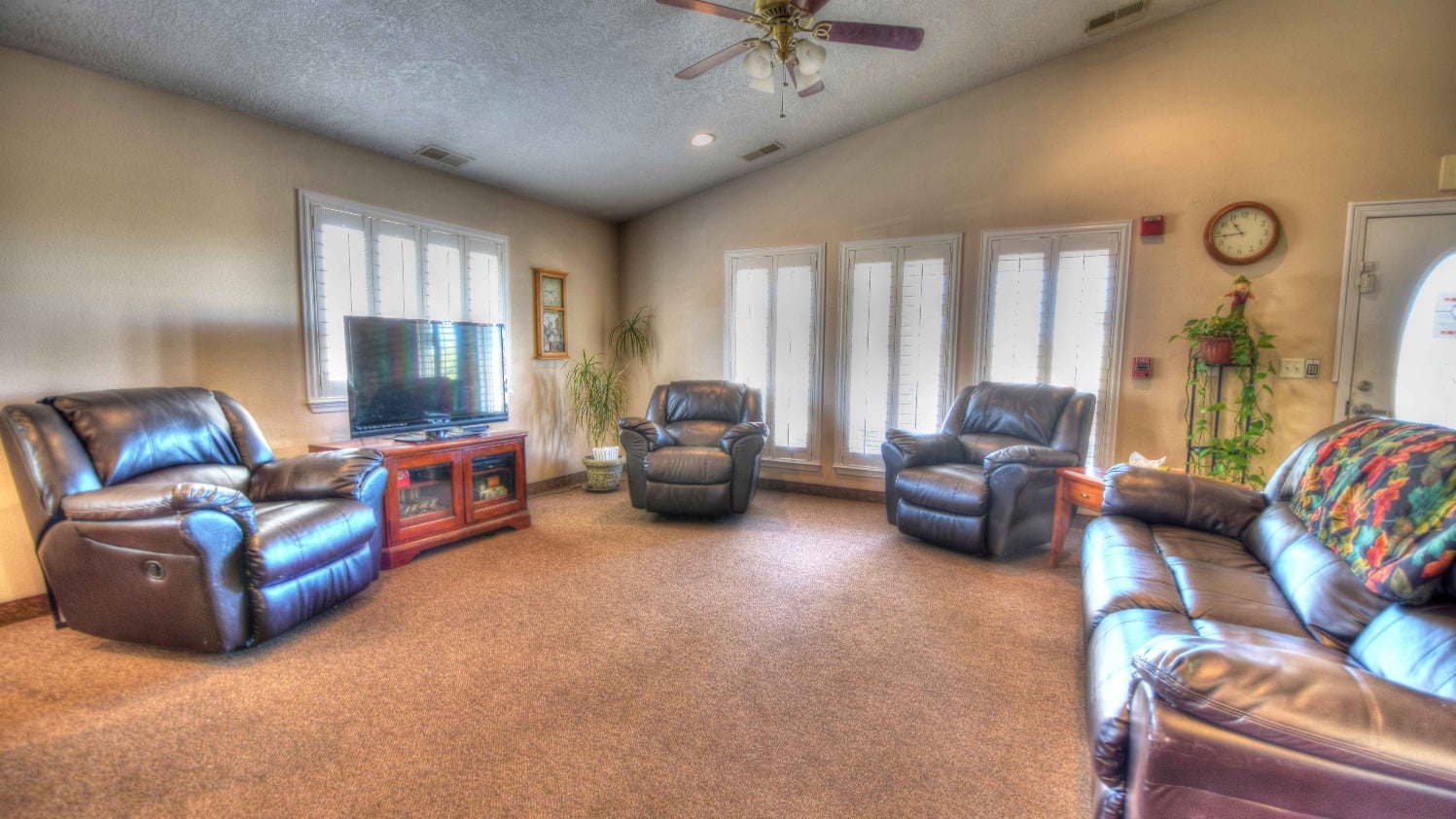
BeeHive Assisted Living Homes of Rio Rancho NM #1 - Dementia Care & Memory Care provides a home-like residential environment
BeeHive Assisted Living Homes of Rio Rancho NM #1 - Dementia Care & Memory Care creates customized care plans as residents’ needs change
BeeHive Assisted Living Homes of Rio Rancho NM #1 - Dementia Care & Memory Care assesses individual resident care needs
BeeHive Assisted Living Homes of Rio Rancho NM #1 - Dementia Care & Memory Care accepts private pay and long-term care insurance
BeeHive Assisted Living Homes of Rio Rancho NM #1 - Dementia Care & Memory Care assists qualified veterans with Aid and Attendance benefits
BeeHive Assisted Living Homes of Rio Rancho NM #1 - Dementia Care & Memory Care encourages meaningful resident-to-staff relationships
BeeHive Assisted Living Homes of Rio Rancho NM #1 - Dementia Care & Memory Care delivers compassionate, attentive senior care focused on dignity and comfort
BeeHive Assisted Living Homes of Rio Rancho NM #1 - Dementia Care & Memory Care has a phone number of (505) 221-6400
BeeHive Assisted Living Homes of Rio Rancho NM #1 - Dementia Care & Memory Care has an address of 204 Silent Spring Rd NE, Rio Rancho, NM 87124
BeeHive Assisted Living Homes of Rio Rancho NM #1 - Dementia Care & Memory Care has a website https://beehivehomes.com/locations/rio-rancho/
BeeHive Assisted Living Homes of Rio Rancho NM #1 - Dementia Care & Memory Care has Google Maps listing https://maps.app.goo.gl/FhSFajkWCGmtFcR77
BeeHive Assisted Living Homes of Rio Rancho NM #1 - Dementia Care & Memory Care has Facebook page https://www.facebook.com/BeeHiveHomesRioRancho
BeeHive Assisted Living Homes of Rio Rancho NM #1 - Dementia Care & Memory Care has a YouTube Channel at https://www.youtube.com/@WelcomeHomeBeeHiveHomes
BeeHive Assisted Living Homes of Rio Rancho NM #1 - Dementia Care & Memory Care won Top Memory Care Homes 2025
BeeHive Assisted Living Homes of Rio Rancho NM #1 - Dementia Care & Memory Care earned Best Customer Service Award 2024
BeeHive Assisted Living Homes of Rio Rancho NM #1 - Dementia Care & Memory Care placed 1st for Assisted Living Communities 2025
People Also Ask about BeeHive Assisted Living Homes of Rio Rancho NM #1 - Dementia Care & Memory Care
What is BeeHive Homes of Rio Rancho Living monthly room rate?
The rate depends on the level of care that is needed (see Pricing Guide above). We do a pre-admission evaluation for each resident to determine the level of care needed. The monthly rate is based on this evaluation. There are no hidden costs or fees
Can residents stay in BeeHive Homes of Rio Rancho until the end of their life?
Usually yes. There are exceptions, such as when there are safety issues with the resident, or they need 24 hour skilled nursing services
Does BeeHive Homes of Rio Rancho have a nurse on staff?
No, but each BeeHive Home has a consulting Nurse available 24 – 7. if nursing services are needed, a doctor can order home health to come into the home
What are BeeHive Homes of Rio Rancho visiting hours?
Visiting hours are adjusted to accommodate the families and the resident’s needs… just not too early or too late
Do we have couple’s rooms available?
Yes, each home has rooms designed to accommodate couples. Please ask about the availability of these rooms
Where is BeeHive Homes of Rio Rancho located?
BeeHive Homes of Rio Rancho is conveniently located at 204 Silent Spring Rd NE, Rio Rancho, NM 87124. You can easily find directions on Google Maps or call at (505) 221-6400 Monday through Friday 9:00am to 5:00pm
How can I contact BeeHive Homes of Rio Rancho?
You can contact BeeHive Assisted Living Homes of Rio Rancho NM #1 - Dementia Care & Memory Care by phone at: (505) 221-6400, visit their website at https://beehivehomes.com/locations/rio-rancho, or connect on social media via Facebook or YouTube
Visiting the Haynes Community Center and Park provides a quiet neighborhood setting where seniors in assisted living and memory care can relax outdoors during senior care and respite care visits.